Where Land Becomes Design
Landscape architecture is the art and science of shaping outdoor environments so they are beautiful, functional, sustainable, and meaningful. It is more than planting flowers around a building or choosing patio furniture for a backyard. Landscape architecture studies the land itself: its slopes, soil, water, climate, views, circulation, vegetation, history, and human use. Then it turns those conditions into spaces that feel intentional, comfortable, and alive. At its best, landscape architecture makes outdoor places feel effortless. A shaded path curves exactly where you want to walk. A courtyard feels private without feeling closed in. A rain garden handles stormwater while looking natural and elegant. A public park invites families, athletes, walkers, and quiet readers without becoming chaotic. These experiences do not happen by accident. They are designed through careful planning, environmental understanding, and creative vision. For beginners, landscape architecture can seem like a blend of gardening, architecture, engineering, ecology, and urban planning. That is exactly what makes it powerful. It connects buildings to land, people to nature, and beauty to performance. Whether you are planning a home landscape, studying design, improving a commercial property, or simply trying to understand why certain outdoor spaces feel so good, learning the basics of landscape architecture will change the way you see the world outside.
A: Not always, but one can help if you need grading, drainage, structure, privacy, or a full master plan.
A: Start with site conditions, drainage, circulation, budget, and how you want to use the space.
A: Hardscape is built material like patios and walls; softscape is living material like trees and plants.
A: Use clear zones, layered planting, diagonal views, consistent materials, and hidden edges to create depth.
A: They are often excellent choices, but the best plant palette also considers site conditions, maintenance, and design goals.
A: Extremely important; poor drainage can damage plants, patios, walls, lawns, and even nearby buildings.
A: Right-sized plants, healthy soil, mulch, efficient irrigation, durable materials, and simple planting structure.
A: Only as much as serves a purpose, such as play, pets, visual openness, or flexible gathering space.
A: In many climates, fall or early spring is ideal because temperatures are cooler and roots can establish.
A: It is an overall design roadmap showing major spaces, circulation, planting, materials, phases, and long-term improvements.
What Landscape Architecture Really Means
Landscape architecture is the professional design of outdoor spaces. These spaces can include residential yards, gardens, parks, campuses, resorts, plazas, streetscapes, trails, waterfronts, courtyards, civic spaces, and large regional landscapes. The goal is not just to decorate land but to organize it, improve it, protect it, and make it useful for people and ecosystems.
A landscape architect thinks about outdoor space the way an architect thinks about a building. There is structure, flow, proportion, material, function, experience, and atmosphere. Instead of walls, ceilings, and rooms, the landscape architect often works with landforms, trees, pathways, water, planting beds, stone, shade, light, and open air. The finished result may feel natural, but it is shaped by design decisions at every level.
The discipline also has a practical side. Outdoor environments must drain properly, survive local weather, support plant health, handle foot traffic, meet accessibility needs, and work with existing site conditions. Landscape architecture is where beauty meets real-world performance. A design is not successful simply because it looks good in a rendering. It must work across seasons, years, and changing conditions.
Landscape Architecture vs. Landscape Design
Many people use the terms landscape architecture and landscape design interchangeably, but they are not exactly the same. Landscape design usually focuses on the layout, planting, and visual arrangement of outdoor spaces, especially residential gardens and yards. Landscape architecture often involves a broader and more technical scope, including grading, drainage, construction documentation, environmental planning, public spaces, land restoration, and complex site systems.
A landscape designer might help a homeowner choose plants, create a patio layout, and improve curb appeal. A landscape architect may do those things too, but they may also design stormwater systems, public parks, commercial campuses, urban plazas, or large outdoor environments that must meet regulatory and engineering requirements. In many places, the title “landscape architect” is regulated and requires professional education, experience, and licensing. For homeowners, the difference matters most when a project becomes complex. If you are refreshing a planting bed, a designer may be enough. If you are changing grades, managing drainage problems, adding retaining walls, building outdoor rooms, redesigning a full property, or connecting the landscape to architecture and construction, landscape architecture can bring a deeper level of planning.
The Core Purpose of Landscape Architecture
Landscape architecture exists to make outdoor environments work better. That can mean many things depending on the site. In a backyard, it may mean creating privacy, shade, outdoor dining, and a garden that feels peaceful. In a city, it may mean reducing heat, improving walkability, managing stormwater, and giving people access to green space. In a resort, it may mean creating a sense of arrival, luxury, escape, and movement.
The purpose is never only visual. A beautiful landscape that floods after every storm has failed. A courtyard that looks elegant but feels too hot to use has missed its purpose. A public plaza with no shade, no seating, and no comfortable edges may photograph well but remain empty. Landscape architecture is successful when people naturally want to use the space and the environment can support that use over time.
This is why the best landscape architecture feels both designed and inevitable. It responds to the land instead of fighting it. It uses plants that belong to the climate. It places paths where movement makes sense. It frames views, softens hard edges, collects water intelligently, and creates spaces that feel emotionally satisfying.
Reading the Site Before Designing
Every landscape architecture project begins with site analysis. Before drawing a patio, selecting plants, or imagining a finished garden, the designer studies what already exists. This includes sun exposure, shade patterns, wind, soil type, drainage, slopes, existing trees, views, utilities, access points, neighboring buildings, and how people currently move through the area.
Site analysis prevents guesswork. A low area that stays wet may become a rain garden instead of a lawn. A sunny exposed corner may need shade trees, pergolas, or drought-tolerant planting. A steep slope may require terracing, steps, groundcover, or retaining walls. A beautiful distant view may become the anchor for a seating area or path. The land provides clues, and the designer learns to read them. This process is one of the biggest differences between ordinary landscaping and thoughtful landscape architecture. Instead of forcing a generic design onto the property, landscape architecture discovers what the site wants to become. The final design feels stronger because it grows from real conditions.
Designing With Movement and Flow
Outdoor environments are experienced through movement. People arrive, pause, turn, gather, look around, and move again. Landscape architecture shapes that journey. Paths, steps, gates, driveways, terraces, lawns, and planting beds all influence how people travel through a space.
A well-designed landscape does not make people wonder where to go. It guides them naturally. A front walk leads clearly to the entry. A garden path invites exploration. A courtyard creates a pause between indoor and outdoor life. A public park uses trails and open spaces to organize activity without making the environment feel rigid.
Flow also affects comfort. If a grill is too far from the dining area, the outdoor kitchen becomes inconvenient. If a path cuts awkwardly through a lawn, people may create their own shortcut. If a seating area faces the wrong direction, it may feel exposed or disconnected. Landscape architecture solves these problems by designing movement as part of the experience.
Outdoor Rooms and Spatial Design
One of the most useful ideas in landscape architecture is the outdoor room. Just like a house has rooms for cooking, dining, relaxing, and gathering, a landscape can be organized into spaces with different purposes. A patio may serve as an outdoor dining room. A fire pit area becomes a conversation room. A lawn becomes a playroom. A shaded garden bench becomes a quiet retreat.
Outdoor rooms are created with boundaries, overhead elements, flooring, and focal points. A hedge can act like a wall. Tree canopies can feel like a ceiling. Stone paving can define a floor. A fountain, sculpture, fireplace, or specimen tree can anchor the space. These elements create a sense of enclosure without removing the openness that makes outdoor environments special. Good spatial design helps a property feel larger, richer, and more useful. Instead of one undefined yard, the landscape becomes a sequence of experiences. Each area has a reason to exist, and each connects to the next.
The Role of Plants in Landscape Architecture
Plants are living architecture. Trees create shade, height, rhythm, privacy, and seasonal drama. Shrubs form structure, edges, and screening. Perennials add color, texture, and movement. Groundcovers protect soil and soften transitions. Grasses bring motion and lightness. Vines can climb, frame, and soften vertical surfaces.
In landscape architecture, plants are not chosen randomly. They are selected for climate, soil, mature size, maintenance needs, ecological value, texture, color, form, and seasonal behavior. A plant that looks charming in a nursery pot may become a problem if it outgrows the space, needs too much water, or fails in local conditions.
Planting design is both artistic and technical. Designers think in layers, from canopy trees down to ground-level plants. They consider how the landscape will look in spring, summer, fall, and winter. They plan for growth over time, because a landscape is never frozen in one moment. It matures, changes, and develops character.
Hardscape: The Bones of the Landscape
Hardscape refers to the built elements of an outdoor environment. This includes patios, walkways, walls, steps, decks, pergolas, fences, driveways, curbs, edging, seating, fire features, and outdoor structures. If plants are the living body of the landscape, hardscape is the skeleton.
Hardscape gives a landscape structure and usability. A patio creates a stable place for furniture. A retaining wall makes a slope functional. A path protects planting areas and improves movement. Steps handle elevation changes. Paving materials define the mood, whether the design feels modern, rustic, formal, natural, or luxurious. The best hardscape feels connected to both the building and the land. Materials should complement architecture, climate, and use. A sleek concrete terrace may suit a modern home, while natural stone may feel better near a mountain retreat. Good landscape architecture balances hard and soft elements so the outdoor space feels strong but not harsh.
Water, Drainage, and Stormwater Design
Water is one of the most important forces in landscape architecture. Every outdoor space must deal with rain, irrigation, runoff, and drainage. If water is ignored, it can damage foundations, drown plants, erode slopes, stain paving, create mud, or make spaces unusable.
Landscape architects study how water moves across a site. They may use grading, swales, rain gardens, permeable paving, dry creek beds, drains, retention areas, or planted basins to manage it. The goal is to move water safely, slow it down when needed, and sometimes turn it into a design feature.
Stormwater design can also be beautiful. A rain garden filled with native plants can collect runoff while attracting pollinators. A dry streambed can guide water while adding texture. Permeable pavers can reduce runoff while creating an elegant surface. Landscape architecture often transforms a problem into an asset.
Sustainability and Ecological Design
Modern landscape architecture increasingly focuses on sustainability. Outdoor spaces are not separate from the environment; they are part of it. A landscape can consume water, chemicals, fuel, and maintenance, or it can support biodiversity, cool the air, manage rainfall, improve soil, and reduce resource use. Sustainable landscape architecture may include native plants, drought-tolerant planting, lawn reduction, composting, soil restoration, shade trees, pollinator habitat, rainwater capture, permeable surfaces, and efficient irrigation. It may also prioritize local materials, reduced waste, and long-term durability.
Ecological design does not mean a landscape must look messy or wild. It means the space is designed to function responsibly. A sustainable landscape can be modern, elegant, formal, naturalistic, luxurious, or simple. The key is that it works with local climate and living systems instead of depending on constant correction.
Landscape Architecture for Homes
Residential landscape architecture helps homeowners turn their property into a more useful and enjoyable place to live. This can include front yard curb appeal, backyard entertaining, privacy screening, outdoor kitchens, pool areas, garden rooms, play spaces, lighting, drainage improvements, and planting plans.
A strong residential design starts with lifestyle. How do people use the home? Do they entertain often? Need a quiet retreat? Have children or pets? Want lower maintenance? Need shade? Prefer native plants? Want a formal garden or a relaxed natural feel? The answers shape the design.
The best home landscapes feel like an extension of the house. Outdoor spaces should connect naturally to doors, windows, views, and interior rooms. A dining terrace near the kitchen makes sense. A quiet garden outside a bedroom window can create daily beauty. A shaded seating area can make a yard usable during hot months. Landscape architecture helps the home and land work together.
Landscape Architecture in Cities and Public Spaces
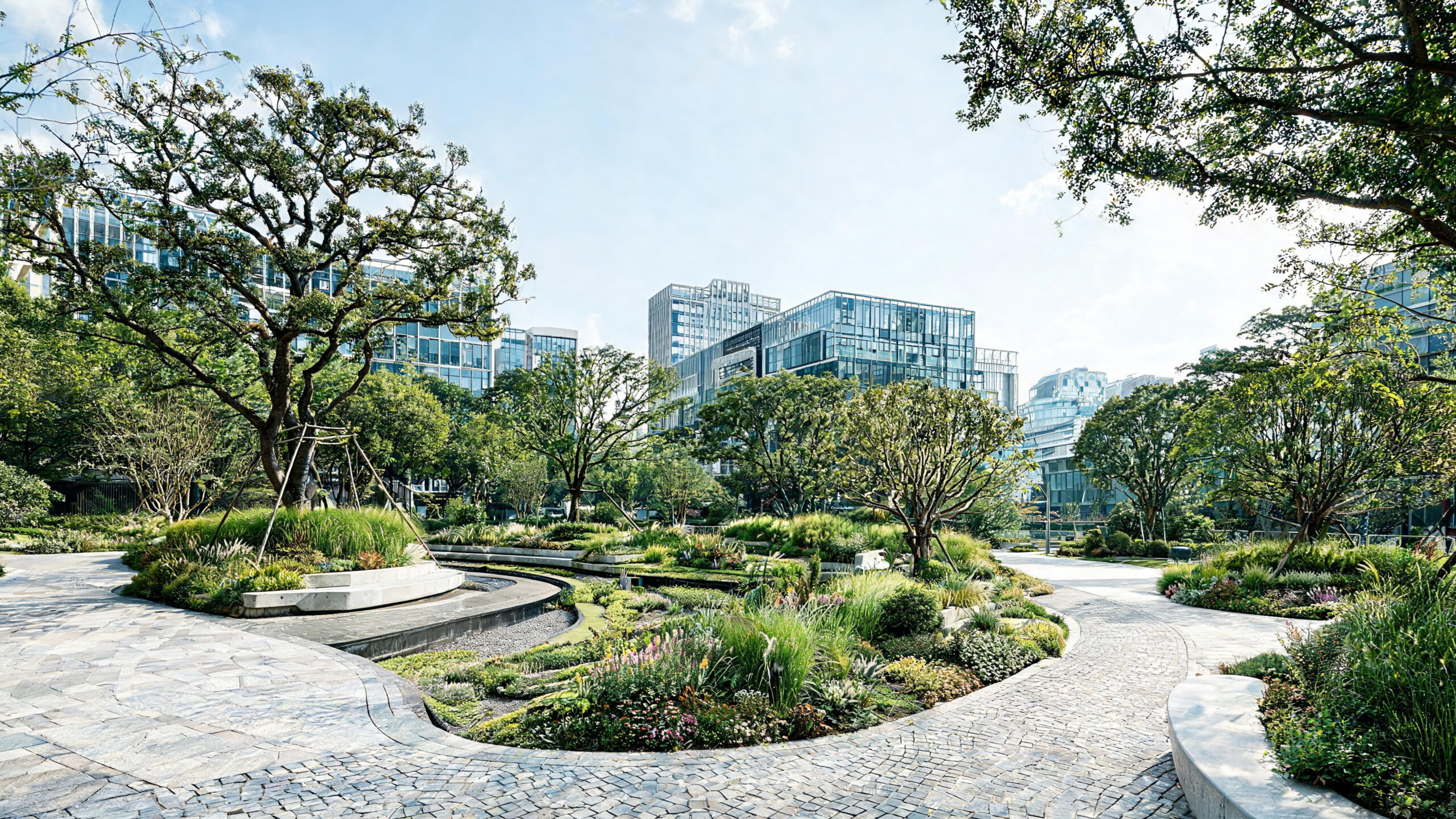
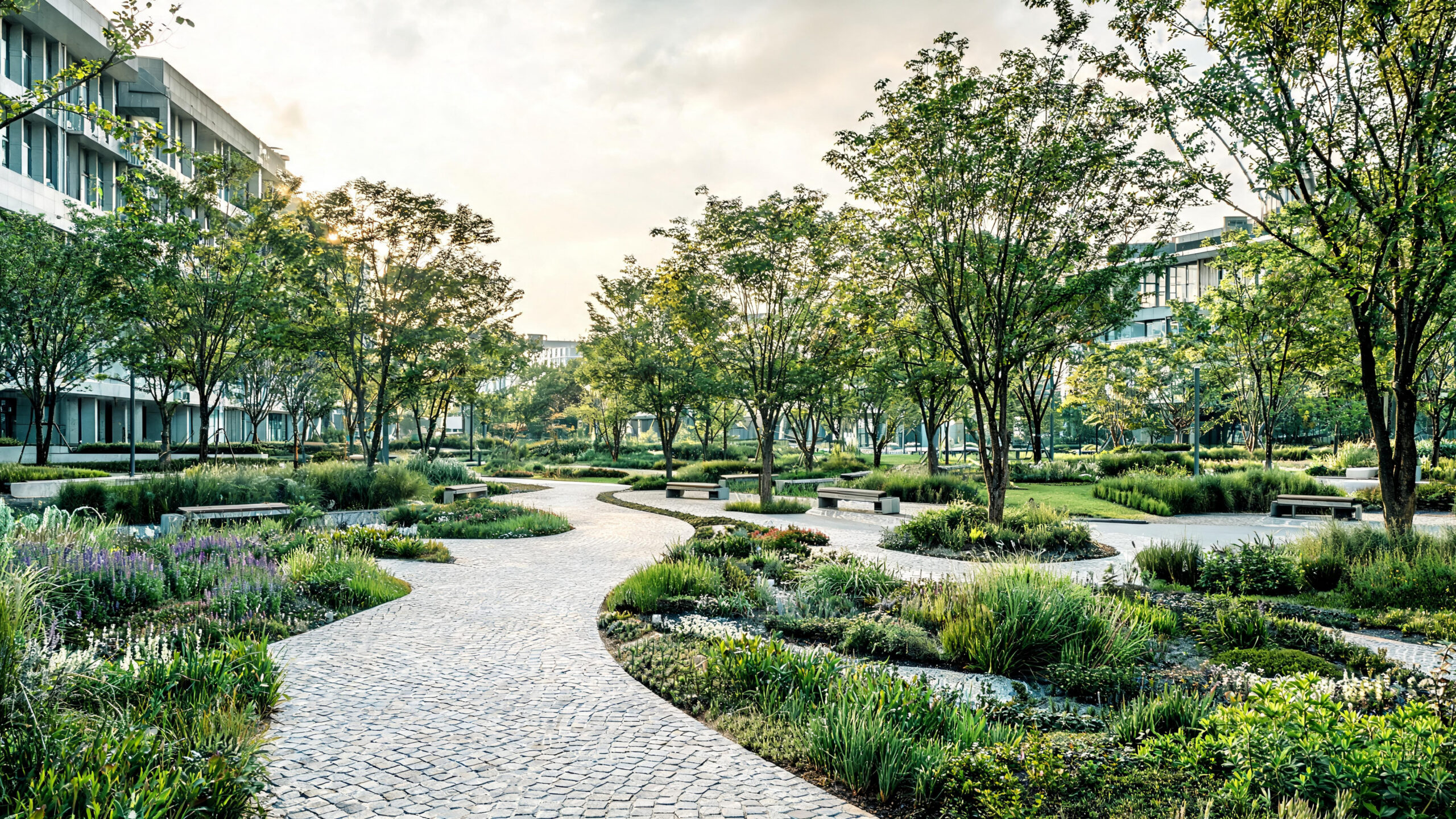
Landscape architecture plays a major role in cities. Parks, plazas, streetscapes, waterfronts, campuses, greenways, transit corridors, and civic spaces all depend on thoughtful outdoor design. These places affect how people move, gather, rest, exercise, commute, and connect with their communities.
Urban landscape architecture also solves environmental problems. Trees reduce heat. Green spaces absorb stormwater. Plantings support birds and pollinators. Walkable streets encourage healthier transportation. Public seating and shade make cities more humane. A well-designed park can become a neighborhood’s outdoor living room. In dense environments, every square foot matters. Landscape architects must balance beauty, durability, safety, accessibility, maintenance, and social use. The result can transform hard urban spaces into places that feel welcoming and alive.
Designing for Climate and Comfort
A landscape that looks good but feels uncomfortable will not be used. Climate is central to outdoor design. Sun, shade, wind, humidity, snow, rainfall, and seasonal temperature changes all shape how a space performs.
In hot climates, shade is essential. Trees, pergolas, covered patios, light-colored paving, and drought-tolerant planting can make outdoor spaces cooler and more comfortable. In cold climates, designers may capture sunlight, block winter winds, and choose materials that handle freeze-thaw cycles. In dry regions, water-wise planting and efficient irrigation become priorities. In wet regions, drainage and durable surfaces matter.
Comfort also includes sound, privacy, seating, lighting, and protection from exposure. Landscape architecture creates spaces where people want to linger, not just pass through.
The Design Process From Idea to Built Space
A landscape architecture project usually begins with discovery. The designer learns about the site, the client’s goals, budget, timeline, and constraints. Then comes site analysis, concept development, design refinement, material selection, planting design, technical drawings, permitting when needed, and construction coordination.
Concept design explores the big moves: where spaces go, how circulation works, what views matter, and what overall character the landscape should have. Later phases add detail: exact dimensions, plant species, paving patterns, lighting locations, grading, drainage, walls, steps, and construction methods. The process is both creative and practical. A beautiful idea must be buildable. A functional solution should still feel inspiring. Landscape architecture lives in that balance between imagination and execution.
Why Landscape Architecture Matters
Landscape architecture matters because outdoor spaces shape daily life. They influence health, mood, movement, property value, climate resilience, and community connection. A well-designed landscape can make a home feel bigger, a city feel cooler, a campus feel more welcoming, or a park feel unforgettable.
It also matters because land is never neutral. Every design choice affects water, soil, plants, wildlife, maintenance, and human experience. Poor outdoor design can create heat, waste, flooding, erosion, confusion, and discomfort. Good design can restore, connect, protect, and delight.
For beginners, the most important lesson is simple: landscape architecture is not just about making outdoor spaces pretty. It is about making them work beautifully.
How to Start Thinking Like a Landscape Architect
To think like a landscape architect, begin by observing. Notice where the sun falls in the morning and afternoon. Watch how water moves during rain. Pay attention to where people naturally walk, where they pause, where they avoid, and where they feel comfortable. Study the views, sounds, smells, shadows, and edges of a place. Then ask what the site needs. Does it need shade, privacy, drainage, gathering space, habitat, color, structure, or better circulation? Instead of starting with decoration, start with purpose. A strong landscape design answers real needs while creating beauty along the way.
Once you understand the land, you can begin shaping it. That is the heart of landscape architecture: reading the outdoor environment, respecting its conditions, and transforming it into a place with function, identity, and life.
Designing the World Outside
Landscape architecture is one of the most powerful design fields because it works with living systems and human experience at the same time. It blends art, ecology, architecture, construction, planning, and storytelling. It can turn a small yard into a retreat, a city block into a gathering place, or a damaged site into a restored landscape.
For anyone new to the subject, landscape architecture offers a richer way to understand outdoor space. It teaches you to see land not as leftover space around buildings, but as a living environment full of possibility. Every path, tree, wall, slope, garden, courtyard, plaza, and park can be designed with intention.
Outdoor environments shape how people live, move, gather, rest, and connect with nature. Landscape architecture gives those environments form, purpose, and beauty. It is the discipline that turns ground into place.