Why Small Bathroom Remodeling Matters
A small bathroom can be one of the most challenging rooms in a house, but it can also become one of the most rewarding spaces to remodel. Limited square footage forces every design choice to work harder, which means a successful remodel can dramatically improve both appearance and function. When done well, a compact bathroom feels brighter, cleaner, more organized, and more comfortable without adding a single extra foot of space. Homeowners often assume a small bathroom is destined to feel cramped, yet smart remodeling strategies can completely change that experience. The key is not simply fitting more into the room, but choosing elements that create openness, improve storage, and make everyday routines easier. A small bathroom that is carefully planned can feel more luxurious than a larger one with poor design.
A: Light colors, large mirrors, glass showers, and reduced clutter help create a larger feel.
A: In many cases yes, because a walk-in shower usually opens more visible floor space.
A: Yes, they create a lighter look and reveal more floor area.
A: Large-format tile or consistent light tile often makes the room feel less busy.
A: Use vertical shelving, recessed niches, medicine cabinets, and over-toilet storage.
A: You can, but lighter palettes usually reflect more light and feel more spacious.
A: Yes, they reflect light and visually expand the room.
A: A narrow or floating vanity with built-in drawers is often a smart choice.
A: Absolutely, especially with quality finishes, strong lighting, and thoughtful storage.
A: Choosing oversized fixtures that overwhelm the layout and reduce movement.
Start with a Space-Smart Layout
The foundation of any successful small bathroom remodel is the layout. In a compact space, every inch matters, so the first step is studying how the room currently functions and where it feels inefficient. A door that swings awkwardly, a vanity that blocks movement, or a tub that overwhelms the room can all make a small bathroom feel tighter than it really is.
Sometimes the best remodeling idea is not adding more features, but rearranging what is already there. Swapping a bulky vanity for a slimmer one, changing a swinging door to a pocket door, or replacing a large tub with a walk-in shower can open the room visually and physically. Layout improvements create the breathing room that makes every other design choice more effective.
Choose a Walk-In Shower Over a Bulky Tub
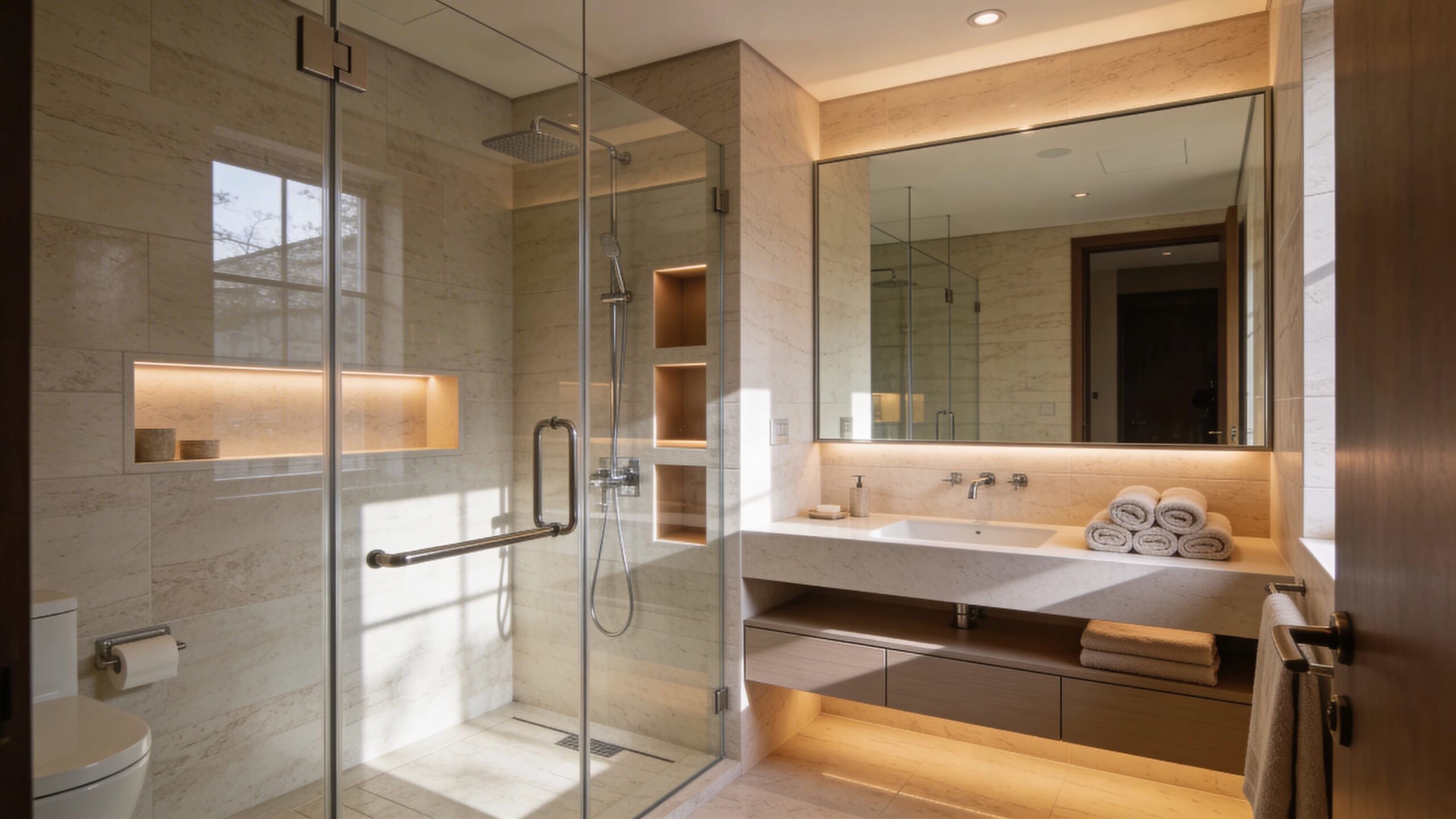
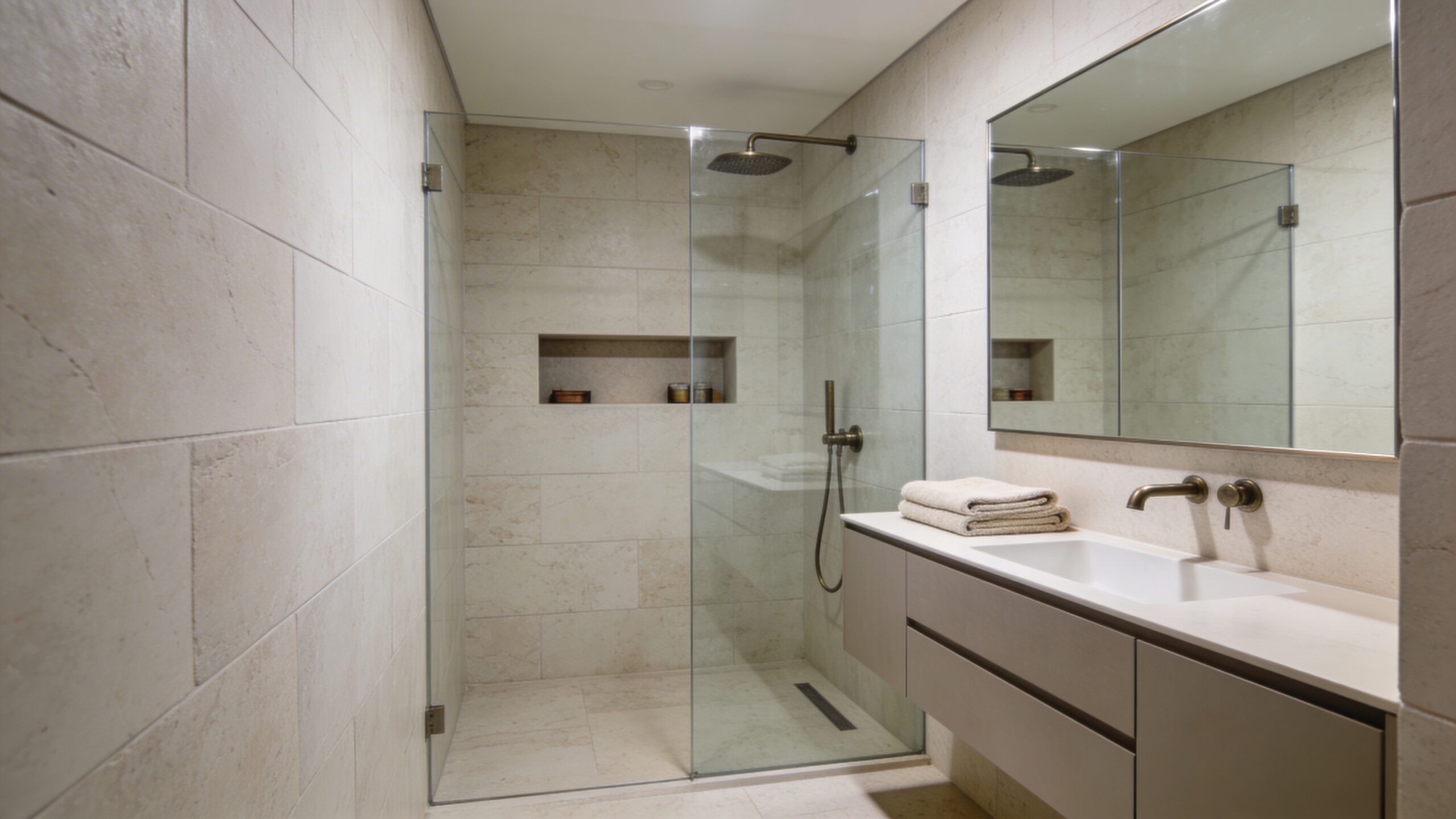
One of the most powerful small bathroom remodeling ideas is replacing a traditional tub with a walk-in shower. In many compact bathrooms, a tub takes up visual and physical space that the room cannot spare. A sleek shower with a low threshold or curbless entry can make the entire bathroom feel more open and contemporary. Frameless glass shower panels are especially effective because they remove the heavy visual barrier created by shower curtains or bulky framed doors. Instead of chopping the room into smaller sections, glass allows the eye to move across the full space. This simple shift can make a small bathroom appear far larger while also giving it a cleaner, more upscale design.
Use Floating Vanities for an Airier Look
A floating vanity is one of the smartest upgrades for a small bathroom because it opens visible floor space and creates a lighter, less crowded appearance. Traditional vanities can feel boxy and heavy in compact rooms, while wall-mounted versions make the floor area more visible and help the bathroom feel less confined.
Floating vanities also create design flexibility. The open area beneath them can be left clear to emphasize spaciousness, or it can be used for neatly placed baskets and small storage bins. When paired with a streamlined sink and simple hardware, a floating vanity gives the room a modern, custom look that feels intentional rather than cramped.
Maximize Vertical Storage
In a small bathroom, floor space is limited, so storage needs to move upward. Vertical storage is one of the most effective remodeling strategies because it uses often-overlooked wall space without making the room feel overcrowded. Tall shelving, medicine cabinets, recessed niches, and wall-mounted organizers can all dramatically improve how the bathroom functions. Built-in storage is especially valuable because it blends into the architecture of the room instead of protruding into it. Recessed shower niches, slim cabinets above the toilet, and shelving tucked between studs provide space for essentials while keeping the room visually calm. The less clutter sitting on counters and ledges, the bigger and cleaner the bathroom will feel.
Let Light Colors Expand the Room
Color plays a major role in how a small bathroom feels. Lighter shades reflect more light and make walls seem farther apart, which instantly helps a compact room appear larger. Soft whites, warm creams, pale grays, muted taupes, and light sandy tones are all excellent choices for creating an open, airy effect.
That does not mean the room has to feel plain or sterile. Texture, tile patterns, wood accents, and subtle contrast can add depth without making the bathroom feel closed in. The goal is to build brightness and continuity. When walls, tile, and major surfaces stay within a light palette, the room gains a sense of calm spaciousness that works beautifully in smaller footprints.
Install Larger Mirrors to Create Depth
A mirror does far more than serve a practical purpose in a small bathroom. It is also one of the easiest ways to create the illusion of extra space. A large mirror reflects light, expands sightlines, and gives the room a more open visual rhythm. In many cases, a single wide mirror above the vanity can make the bathroom feel almost twice as bright. Mirrors are particularly powerful when placed to reflect windows or well-designed lighting. This amplifies both natural and artificial light and helps reduce the boxed-in feeling that small bathrooms sometimes have. Choosing a mirror with a clean profile rather than a thick, heavy frame keeps the overall look streamlined and modern.
Improve Lighting in Layers
Poor lighting can make even a stylish bathroom feel smaller and less inviting. Small bathrooms benefit enormously from layered lighting that combines overhead illumination with task lighting around the vanity and, when possible, accent lighting in niches or shower zones. Good lighting brightens corners, reduces shadows, and helps the room feel more open.
Vanity sconces or side-mounted lights are often more flattering and functional than a single overhead fixture because they distribute light more evenly across the face and mirror area. Recessed ceiling lights can also help keep the room visually clean. When lighting is thoughtfully planned, the bathroom feels bigger, more polished, and far more welcoming.
Rely on Tile to Shape Perception
Tile is one of the most important design tools in a small bathroom remodel. The size, color, and layout of tile can visually stretch the room and make it feel more cohesive. Large-format tiles often work surprisingly well in compact bathrooms because they reduce grout lines and create a smoother, less busy appearance. Running tile continuously across the floor and into the shower can further enhance the feeling of openness. This uninterrupted flow makes the room feel longer and more unified. Vertical tile patterns can make ceilings appear taller, while horizontal lines can visually widen narrow walls. In a small bathroom, tile is not just a finish material; it is part of the illusion of space.
Use Glass and Minimal Visual Barriers
Visual clutter makes a small bathroom feel even tighter. One of the best ways to fight that effect is by choosing materials and design details that reduce interruption. Clear glass shower panels, open shelving used sparingly, slim-profile faucets, and simple hardware all help create a more expansive feel.
Heavy shower curtains, oversized cabinets, and bold visual contrasts can segment the room and make it seem crowded. Minimal barriers allow the eye to travel more freely, which makes the bathroom feel calmer and larger. When each element is chosen for both utility and visual lightness, the room begins to feel intentionally designed rather than merely squeezed together.
Add Recessed Features Wherever Possible
Recessed features are some of the best space-saving upgrades in a small bathroom because they provide function without taking up valuable square footage. A recessed medicine cabinet, shower niche, toilet paper holder, or even a built-in shelf can make a major difference in daily usability. These details are especially effective because they reduce the number of objects projecting into the room. Instead of relying on bulky shelves or baskets that compete for space, recessed features keep essentials organized while preserving a clean and efficient profile. They are subtle upgrades, but in small bathrooms, subtle improvements often deliver the biggest impact.
Make the Most of Corners and Awkward Spaces
Corners are often underused in compact bathrooms, yet they can become some of the most valuable real estate in the room. A corner sink, corner shelving, or a carefully placed storage tower can help free up central space and improve movement. Even narrow gaps beside a vanity or toilet can sometimes hold a slim cabinet or custom shelf.
Remodeling a small bathroom successfully often comes down to noticing opportunities that other designs ignore. Space above the toilet, walls beside the mirror, and shallow niches between framing members can all be transformed into useful storage or display areas. When awkward spaces are put to work, the room becomes more efficient without feeling overfilled.
Select Fixtures with a Smaller Footprint
Not every bathroom fixture needs to be full sized. Compact toilets, narrow-depth vanities, wall-mounted faucets, and slim sinks can all help maximize movement and usable area in a smaller room. Choosing the right scale is essential, because an oversized vanity or deep cabinet can dominate a bathroom that needs breathing room. Smaller fixtures do not have to feel cheap or temporary. Many modern options are designed specifically for tight spaces and still offer elegant styling, quality materials, and impressive function. In fact, selecting fixtures that fit the room properly often makes the overall bathroom feel more high-end, because the design looks balanced and purposeful.
Keep the Design Cohesive and Uncluttered
A small bathroom benefits from visual simplicity. Too many colors, patterns, finishes, and accessories can make the room feel chaotic. Cohesion helps the eye understand the space as one complete environment rather than a collection of competing parts. That sense of unity creates calm, and calm always makes a small room feel more generous.
This does not mean the bathroom should be boring. A striking tile wall, a warm wood vanity, or a bold light fixture can add personality, but the overall palette and material selection should remain controlled. When the design feels edited and intentional, even a tiny bathroom can feel elevated, stylish, and comfortable.
Add Luxury Through Details, Not Size
A small bathroom can still feel luxurious, and often the secret is focusing on details rather than square footage. High-quality fixtures, elegant lighting, soft-close drawers, beautiful tile, and a well-framed mirror can all create a boutique-hotel effect in a compact footprint. Luxury in a small bathroom comes from refinement, not excess. Thoughtful additions such as heated floors, towel hooks in the right places, coordinated finishes, and neatly integrated storage can dramatically improve the daily experience of the room. These upgrades prove that a bathroom does not need to be large to feel special. When space is limited, craftsmanship and smart choices become even more important.
Remodeling for Function, Beauty, and Value
Small bathroom remodeling is about far more than appearance. A better layout, improved storage, brighter lighting, and more efficient fixtures can transform a frustrating room into one of the most functional spaces in the house. These improvements matter every day, because bathrooms are among the hardest-working rooms in any home.
They also matter financially. Well-designed bathroom upgrades consistently rank among the most appealing home improvements for buyers. A small bathroom that feels modern, bright, and organized can elevate the impression of the entire home. That makes smart remodeling a valuable investment in both comfort and resale appeal.
A Small Bathroom Can Feel Surprisingly Big
The most exciting part of remodeling a small bathroom is discovering how much potential a compact space can hold. Even modest changes can completely shift the mood of the room. Better light, cleaner lines, smarter storage, and a more open layout can turn a tight bathroom into a space that feels fresh, stylish, and far larger than its measurements suggest. When homeowners approach the remodel with creativity and discipline, a small bathroom becomes a design opportunity rather than a limitation. With the right ideas, even the tiniest room can feel polished, practical, and beautifully efficient. Small spaces do not need to settle for less. In many cases, they simply need smarter design.